This high-level forum will bring together government agencies, law enforcement bodies, embassies, prosecutors, multilateral organisations, financial and technology sector actors, and specialist civil society organisations to address the rapidly evolving landscape of transnational organised crime in Southeast Asia. Discussions will focus in particular on trafficking for forced criminality within cyber scamming compounds — a growing manifestation of increasingly polycriminal networks operating across human trafficking, cyber-enabled fraud, financial crime, and document fraud.
Designed as a strategic working platform rather than a traditional conference, the forum will prioritise practical collaboration and operational dialogue. Key objectives include identifying systemic gaps in regional responses, strengthening cross-border coordination, exploring secure data-sharing models, improving victim identification and protection frameworks, and developing recommendations for a regional strategy report.
Programme
Day 1: Regional Strategic Forum — Open Strategic Dialogue
Days 2–3: Closed Technical Working Sessions
Further details on the venue and full programme will be shared following confirmation of participation.
Date: Wednesday, 22 April, 11 am – 12 noon (Melbourne time)
Location: Hybrid — Zoom and Asia Institute Conference Room 321, Parkville
Speaker: Associate Professor John Donaldson (Singapore Management University)
Registration: Required via Humanitix
Enquiries: china-centre@unimelb.edu.au
Overview
What if one way to reduce poverty involved doing the opposite of what orthodox economics recommends? Instead of scaling up enterprises, what if we supported the small and the localised? Instead of chasing high-tech production, we embraced traditional and lower-tech approaches? Instead of urbanising rapidly, we invested in the vitality of small towns and rural communities? Instead of measuring success through aggregate growth, we asked whether everyone had enough?
These questions underpin a “small works” approach to development — rooted in classical economics and grounded in real-world evidence. Drawing on fieldwork in China, Thailand, Malaysia, Singapore, and Barbados, among other cases worldwide, A/Prof Donaldson will show how small-scale, low-tech, pro-poor initiatives can significantly reduce poverty at a more sustainable pace of economic growth, inviting us to reconsider the relationship between scale, technology, community, sufficiency, and well-being.
About the speaker
John Donaldson is Associate Professor of Political Science at the School of Social Sciences, Singapore Management University. His research examines politics, rural development, and poverty, grounded in two decades of fieldwork in China and extended through comparative research across Asia, Europe, Africa, and the Caribbean. He is the author of Small Works: Poverty and Economic Development in Southwestern China (Cornell University Press, 2011), with work appearing in World Development, China Quarterly, and the Journal of Development Studies. He is currently working on a forthcoming book, Small Steps: Exploring a Path to Sufficiency through Small-Scale, Low-Tech, Human-Oriented Initiatives.
Co-hosted by: Grandview Institution and the Centre for Contemporary Chinese Studies (CCCS), University of Melbourne
Overview
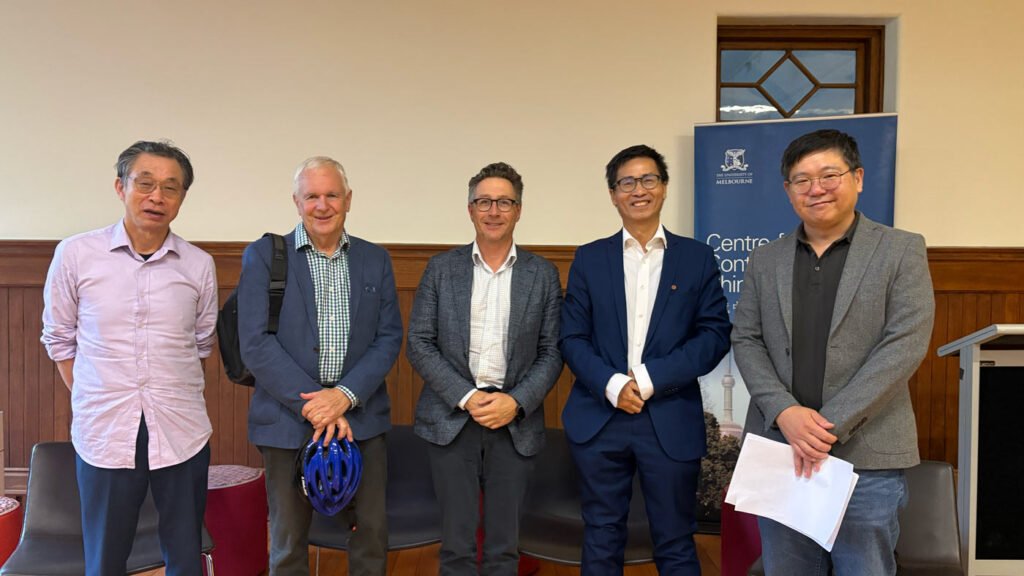
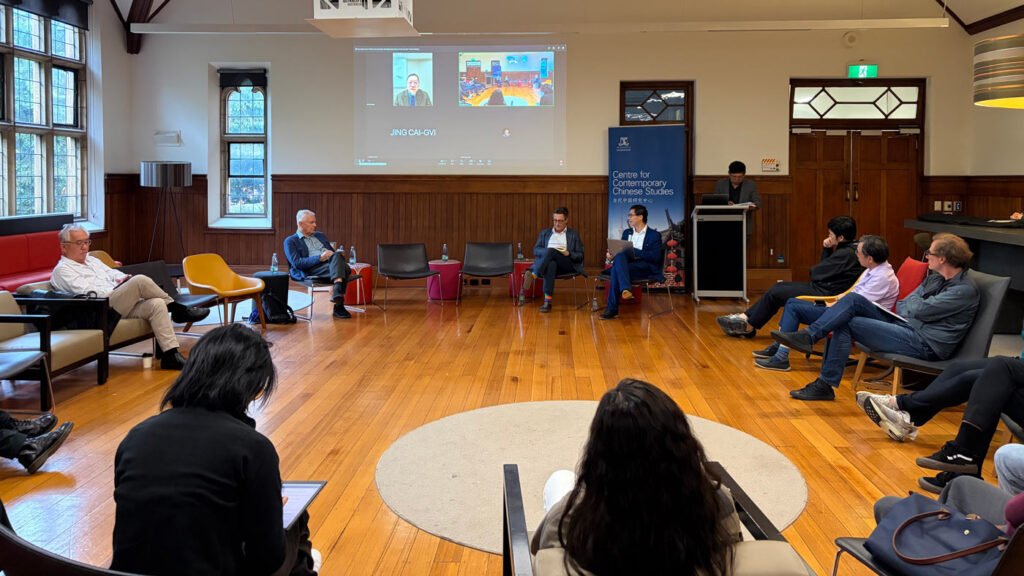
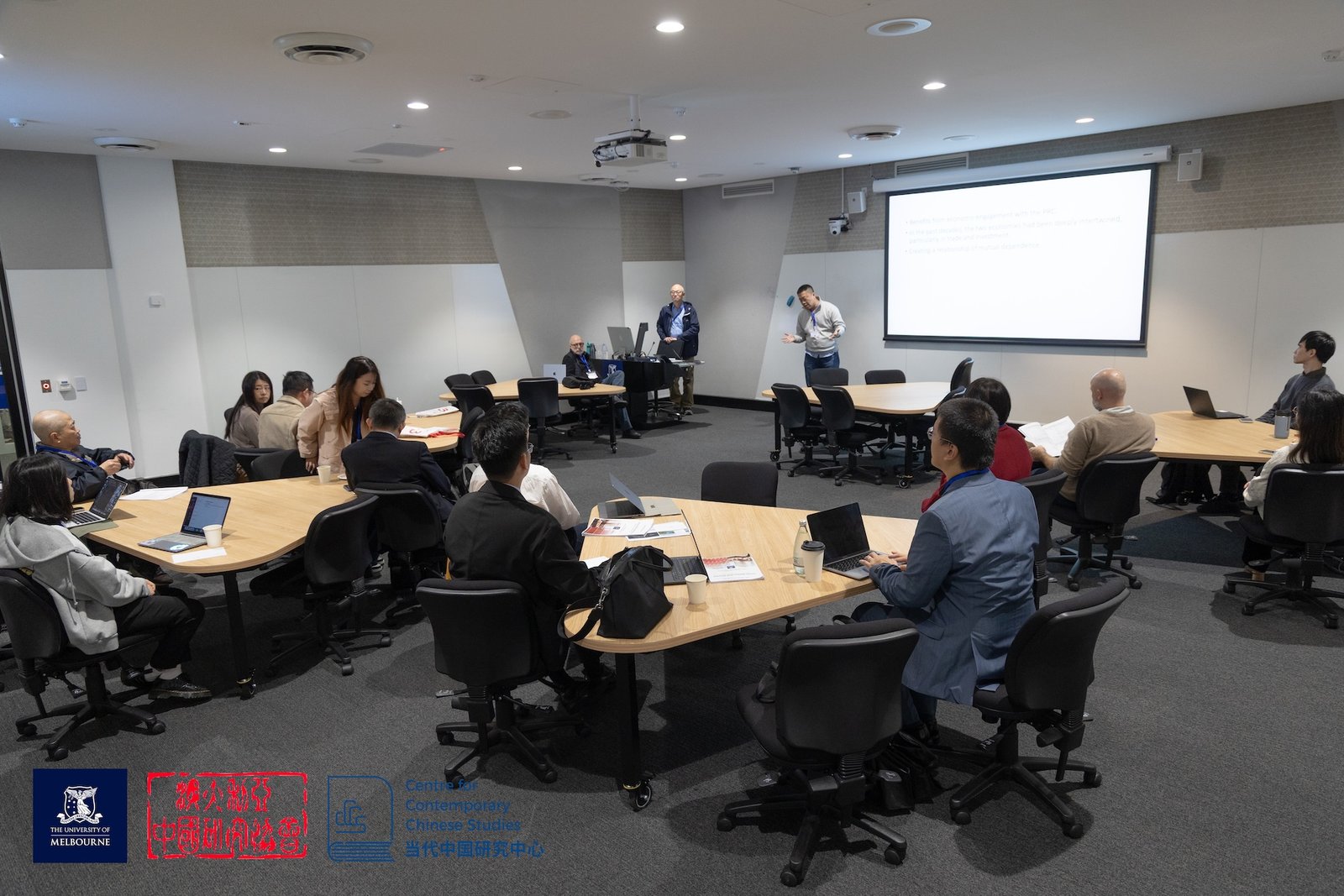
This academic forum brought together scholars from across universities and research institutions to examine China-related issues against the backdrop of the evolving international and regional landscape. Discussions focused on developments in the Middle East and their implications for regional security, energy cooperation, economic relations, and global affairs, drawing on perspectives from international relations, area studies, and global governance.
Chair
Dr Sow Keat Tok (Asia Institute, University of Melbourne)
Speakers and discussants
Professor Nick Bisley — Deputy Vice-Chancellor, La Trobe University
Professor Baogang He — Alfred Deakin Chair, Deakin University
Professor Shen Dingli — Director, Centre for American Studies, Grandview Institution
Other invited scholars
The forum served as a valuable platform for academic exchange between Chinese and Australian scholars on issues of shared regional and global concern.
Location: Sidney Myer Asia Centre, University of Melbourne (Hybrid)
Theme: Youth and Civil Society
Co-sponsors: Research Cluster on Asian Civil Society (Asia Institute) and the Centre for Contemporary Chinese Studies (CCCS)
Supported by: Ford Foundation
Overview
The fifth biennial Civil Society in Asia conference convened scholars and practitioners to explore the pivotal role of young people in shaping Asia’s future. The programme addressed three core pillars: youth activism and democratic governance; youth in climate action; and AI and the empowerment of young women.
Highlights
Agenda-setting address by Professor Akihiro Ogawa (University of Melbourne)
Keynote by Professor Ming-sho Ho (National Taiwan University): “Be Water: The 2019 Hong Kong Protests from an Actionist Sociology Perspective”
Sessions examining the “Asian Monsoon” of youth-led movements across Thailand, Sri Lanka, and Hong Kong
Panels on climate justice in the Global South and gender inclusion in the Fourth Industrial Revolution
Each presenter contributed concrete policy recommendations and civic techniques aimed at embedding youth inclusion into global governance. The conference concluded with a strategy meeting charting the future of the Asian Civil Society Research Network (ACSRN).
Location: Conference Room 158-3-321, University of Melbourne
Organised by: Jessie Xu, in collaboration with Transparency International Australia
Overview
This day-long research workshop brought together researchers from the University of Melbourne, La Trobe University, and Transparency International. The morning session featured presentations by the Chile and Zambia chapters on their research findings, followed by an afternoon roundtable (3:30–5:00 PM) offering an informal Q&A and open discussion with the visiting chapters.
Hosted by: Centre for Contemporary Chinese Studies (CCCS), Asia Institute, University of Melbourne
Co-organised with: Hong Kong Baptist University
Supported by: University of International Business and Economics, Faculty of Arts (University of Melbourne), Ford Foundation, CNKI, and Juneyao Air
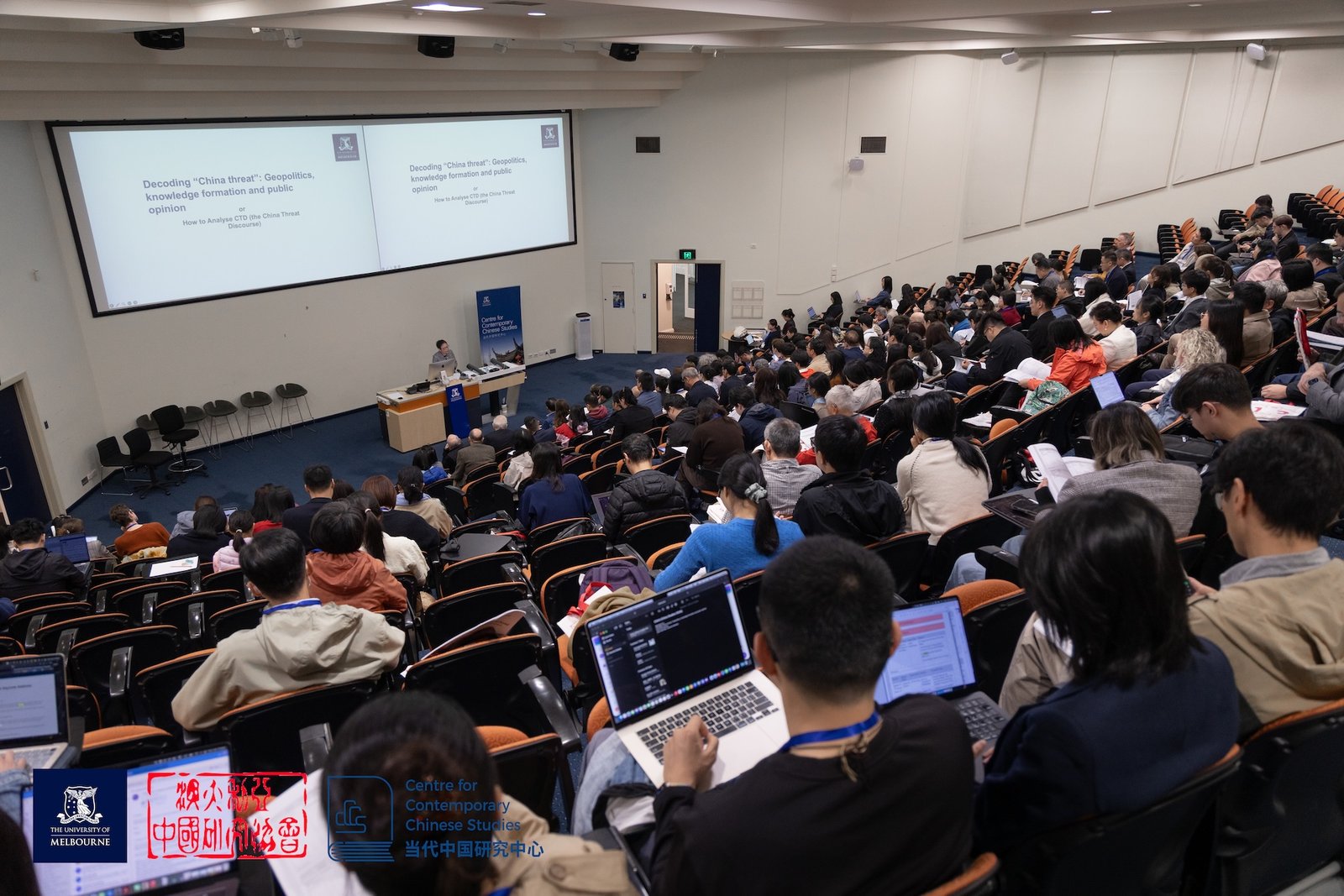
Participants: More than 300 from over 15 countries
Overview: The 2025 Chinese Studies Association of Australia Biennial Conference was a landmark gathering for the field. Under the theme “China Within and Beyond,” it offered a rich platform for interdisciplinary dialogue on the changing contours of China and China studies, drawing scholars across language and linguistics, anthropology, literature, geography, history, sociology, political science, economics, business, and law. The breadth of disciplines and international representation made it a standout success in fostering cross-border scholarly exchange.